Tesla Comes One Step Closer to Self-Driving With a New Camera Patent
Tesla takes an unusual approach in its quest to “solve autonomy,” as CEO Elon Musk says, relying more heavily on camera systems than lidar and radar sensors to help guide semi-autonomous driving in its vehicles. Indeed, Tesla began removing ultrasonic sensors in 2022. It’s something that many have been critical of, but the electric vehicle manufacturer is determined to make its deceptively named Full Self Driving (Supervised) system work with as little reliance on anything but cameras as possible, as evidenced by a new patent filed with the United States Patent and Trademark Office, first spotted by Not a Tesla App. The patent describes a way of shielding FSD camera lenses from glare, something that can be a hindrance to human drivers and robotaxis alike, and often causes FSD to disengage.
The Problem and Tesla’s Patent-Pending Solution
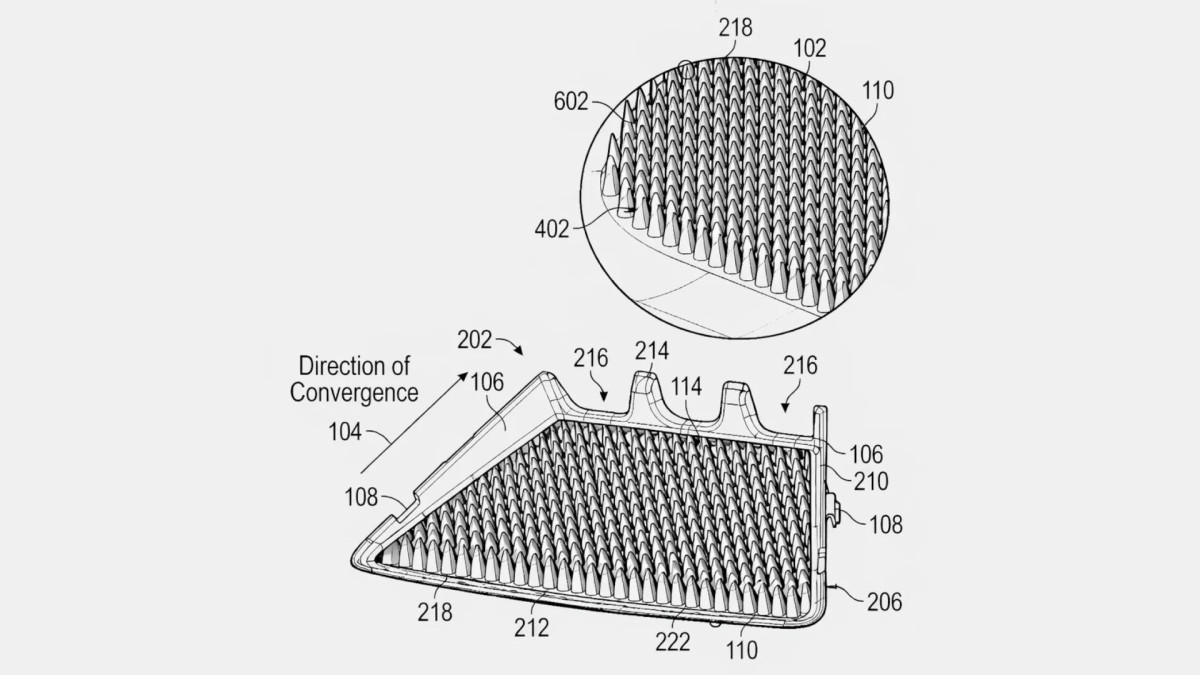
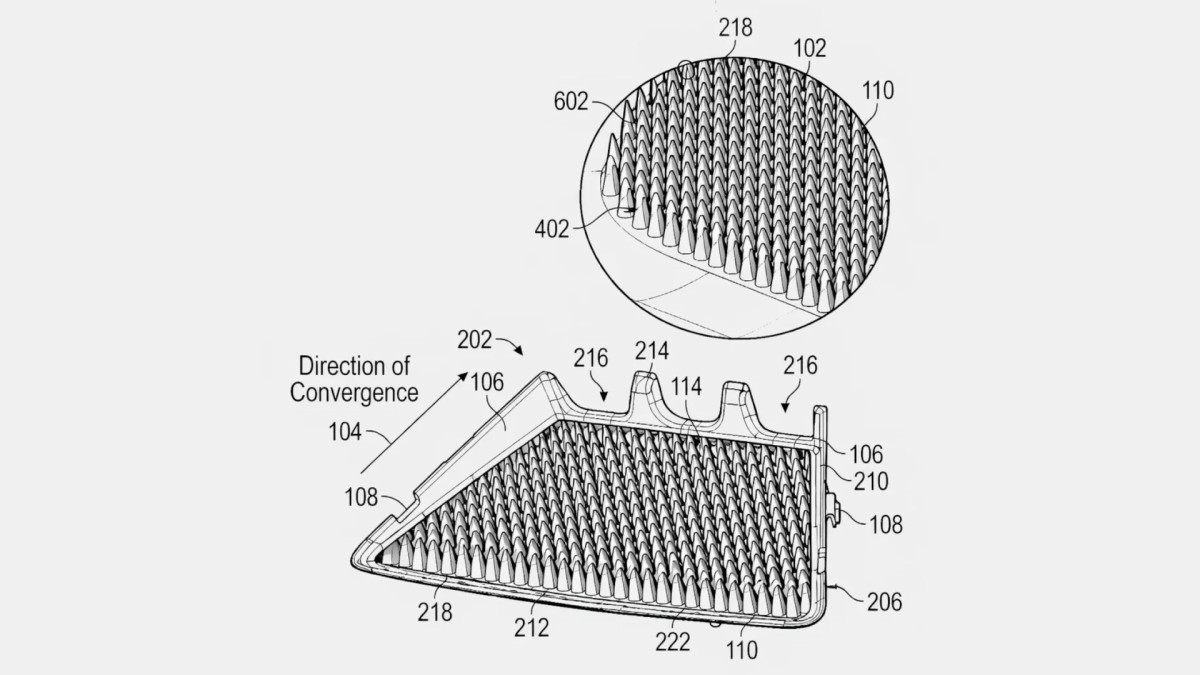
The patent draws attention to the fact that traditional glare shields (the plastic housings around cameras) are usually just regular pieces of textured plastic, and even though these have a matte black finish, they are still flat surfaces that reflect a significant amount of light towards the camera lens, washing out the sensor. Thus, these shields fail to adequately lower the Total Hemispherical Reflectance (THR) needed for a camera to work in all conditions, and that’s a major problem for autonomous driving. Tesla’s solution is to produce the glare shields with a three-dimensional array of ultra-minuscule cones – not unlike the acoustic foam used to dampen sound in a recording studio.
Related: Elon Musk Says Tesla FSD Now Lets Drivers Text and Drive, But It’s Still Illegal
These microscopic cones would have heights ranging from 0.65 millimeters to 2 mm and sharp tips, trapping incident light instead of allowing it to bounce off. To further improve the design of camera housings, the patent proposes an ultra-black coating, like Vantablack or other carbon-nanotube-based paints, creating a void from which light cannot escape. This aims to drastically reduce the THR, thereby allowing the camera to see as clearly as possible.
An Active Anti-Glare System
Tesla
While the basic idea seems likely to be effective, Tesla wants to take things a step further with an electromechanical adjuster for the shield, using stepper motors and actuators to tilt it in real-time depending on where the sun or other sources of glare – like other traffic in the nighttime – are emanating from. Finally, Tesla’s patent addresses how it might produce the glare shields, which would be difficult on such a microscopic level: sintered steel, which appears solid but allows air to pass through, would be used to produce the proposed sharp-tipped cones rather than plastic, which might easily be deformed or otherwise damaged. Combine this idea with a recent Tesla patent for in-car Starlink, and it seems that the automaker’s future EVs may be more capable than ever thought possible – despite not using lidar or radar.