‘Robust protection’: The safest new cars you can buy in Australia
Safety is at the top of most consumers’ minds, and ANCAP has revealed the safest new cars tested in 2025. Here’s what you need to know.
When you’re in the market for a new car, chances are a car’s safety features are top of mind.
The Australasian New Car Assessment Program (ANCAP) – the peak independent new car safety body – tests numerous new models each year, and has revealed the new cars that achieved the highest safety ratings in 2025.
RELATED: Baby seat bingo: Will my child seat fit my car?
ANCAP assessed new cars based on four safety pillars: adult occupant protection, child occupant protection, vulnerable road user protection and safety assist. During testing, cars must achieve at least 80 per cent for the first two pillars and 70 per cent for the second two in order to receive a five-star safety rating.
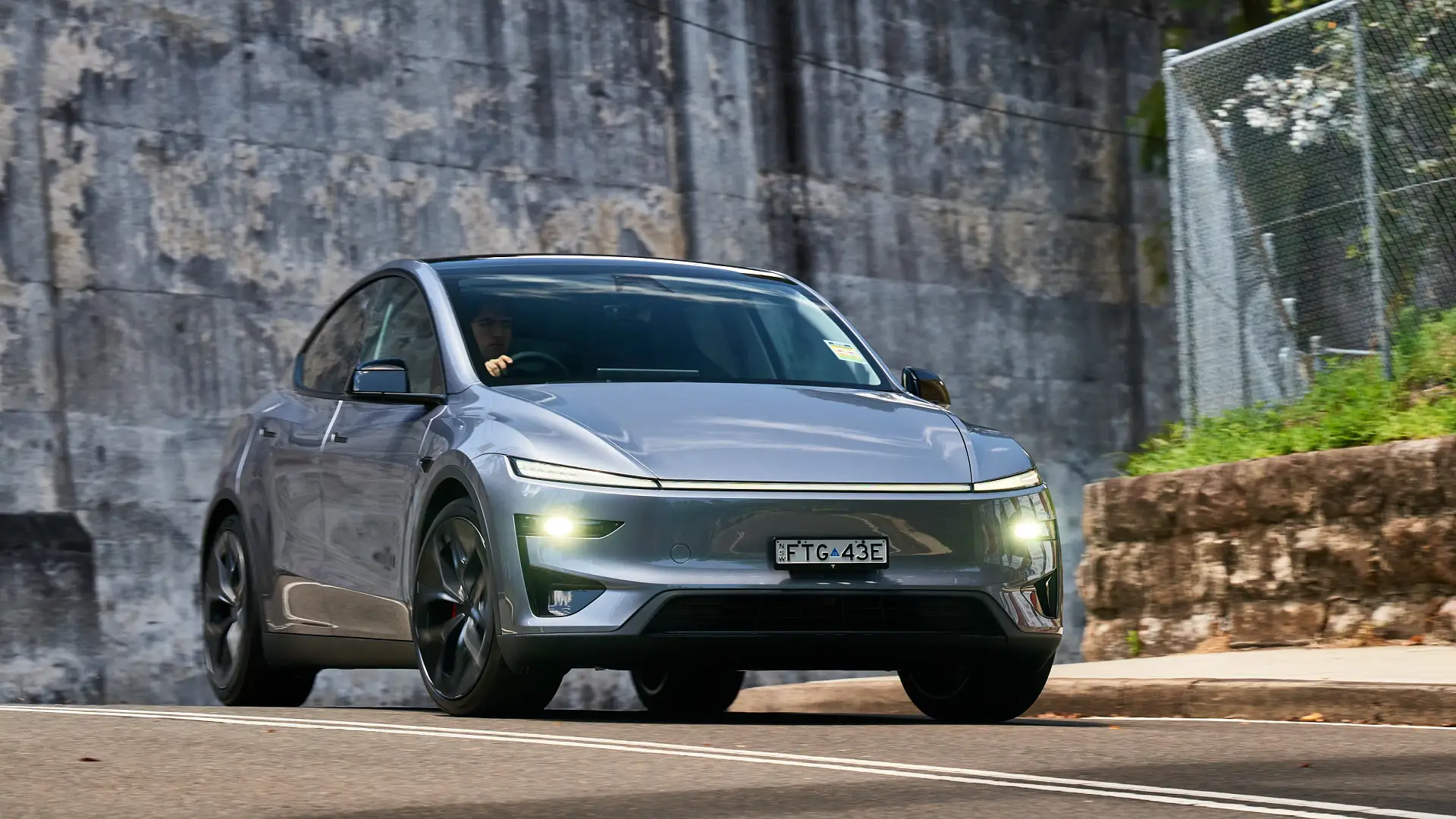
Among the cars tested by ANCAP in 2025, the Tesla Model Y scored the highest marks, with the electric SUV achieving 91, 95, 86 and 92 per cent across ANCAP’s four safety pillars, respectively.
The Tesla Model 3 ranked second, which comfortably exceeded the minimum criteria for a five-star rating, with the battery-powered sedan scoring its highest mark in child occupant protection (95 per cent).
In the large SUV segment, ANCAP awarded top marks to the Volvo EX90 – which scored 92 and 94 per cent, respectively – in adult and child occupant protection. The electric SUV also achieved a score of 82 per cent in vulnerable road user protection and 84 per cent for its safety assist.
Meanwhile, the IM 5 – MG’s premium sub-brand – was the best performer in the large cars segment, achieving 89 and 91 per cent in adult and child occupant protection, and a further 85 and 79 per cent in vulnerable road user protection and safety assist, respectively.
According to ANCAP chief executive Carla Hoorweg, the top performing cars in 2025 showed consistency across the four key pillars as opposed to “relying on strength in a single area”.
“The breadth of top performers this year shows that high levels of safety are achievable across multiple vehicle segments, giving consumers clearer choice when safety is a priority,” the executive added.
Looking at the small SUV market, ANCAP said the MG S5 electric car was the best performing model, with the battery-powered SUV scoring its highest mark in adult occupant protection (90 per cent).
Meanwhile, the Mini Cooper E was the top safety model in the light/small car segment, with ANCAP awarding the electric hatch 89 and 83 per cent respectively in adult and child occupant safety.
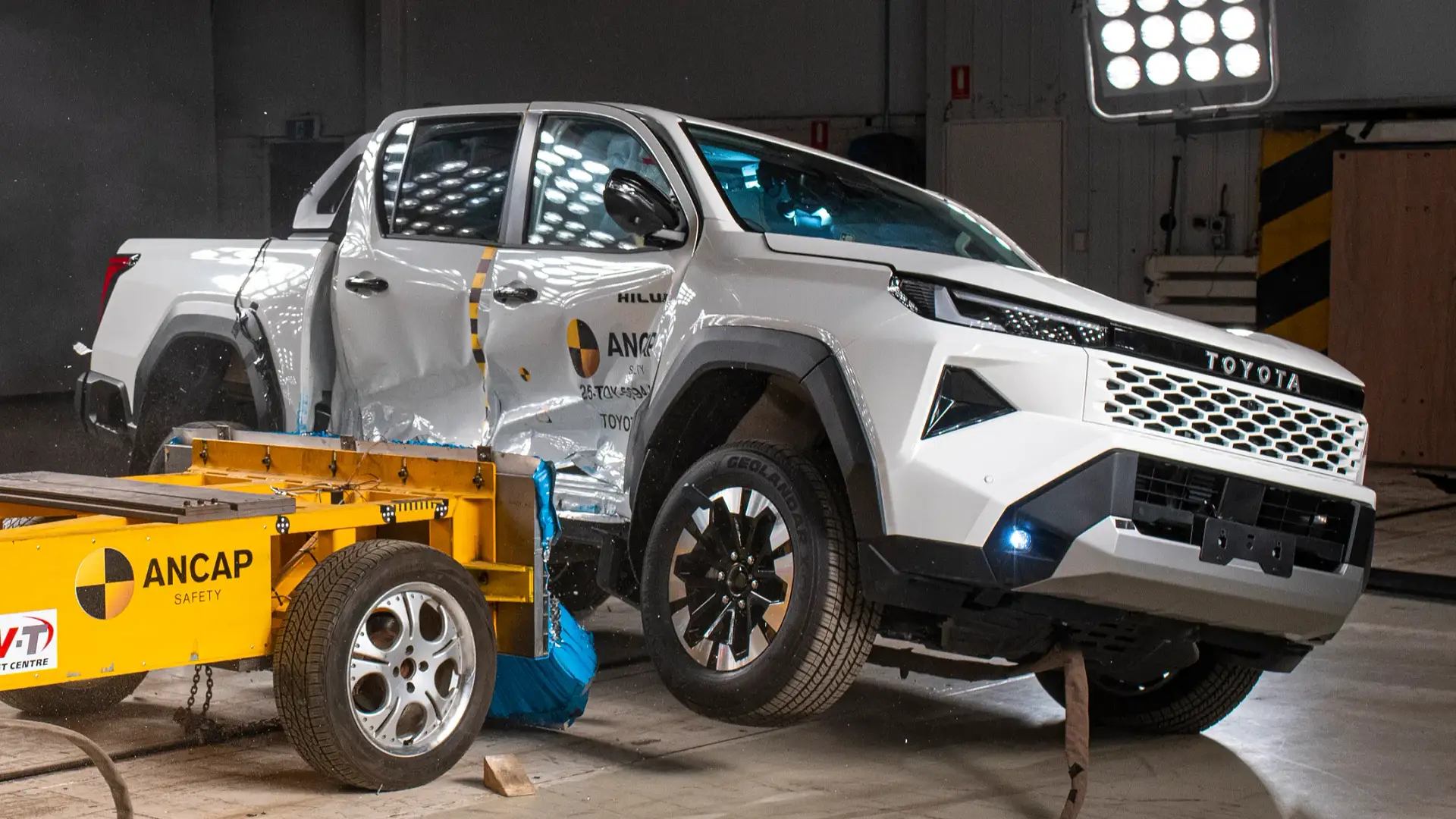
Finally, the Toyota HiLux took home the crown as the safest utility vehicle according to ANCAP, with the ute achieving 82 per cent each in vulnerable road user protection and safety assist. Additionally, the Toyota HiLux scored 84 and 89 per cent in adult and child occupant safety.
| Model | Adult occupant protection (%) | Child occupant protection (%) | Vulnerable road user protection (%) | Safety assist (%) |
| Tesla Model Y | 91 | 95 | 86 | 92 |
| Tesla Model 3 | 90 | 95 | 89 | 88 |
| Volvo EX90 | 92 | 94 | 82 | 84 |
| IM 5 | 89 | 91 | 85 | 79 |
| MG S5 | 90 | 86 | 82 | 79 |
| Mini Cooper E | 89 | 83 | 77 | 83 |
| Toyota HiLux | 84 | 89 | 82 | 82 |
According to Hoorweg, the independent safety body’s testing criteria line up with critical safety features needed for local roads.
“We are seeing increasing alignment between ANCAP’s testing criteria and the safety technologies that genuinely matter on Australian and New Zealand roads,” she said.
“Improvements in autonomous emergency braking, lane support and driver monitoring systems are translating into more robust protection in everyday driving.”
Despite these models being awarded top marks in 2025, it’s worth noting ANCAP has tightened its 2026 testing criteria, with annoying and overzealous safety features expected to be penalised.
As reported by Drive in November 2025, among the biggest changes under ANCAP’s more stringent 2026 protocols include docking points for crash-avoidance technologies such as lane-change assist that intervene too quickly or aggressively.
Additionally, the independent safety body said it will reward physical buttons for essential controls, while penalising models with convoluted systems for basic functions.
“Our focus on in-car distractions will be further enhanced from 2026, and will include indicators, hazard lights, windscreen wipers, headlights and the horn. Tactile buttons and/or stalks will be rewarded,” Hoorweg told Drive in August 2025.
“Locating vehicle controls on – or buried within – a touchscreen can add complexity and distraction while driving. If key functions are housed in a touchscreen, they must be large enough and positioned at the first level of screen depth – not hidden in submenus.”
The post ‘Robust protection’: The safest new cars you can buy in Australia appeared first on Drive.