Pick of the Day: 1972 Chevrolet “Heavy Chevy”
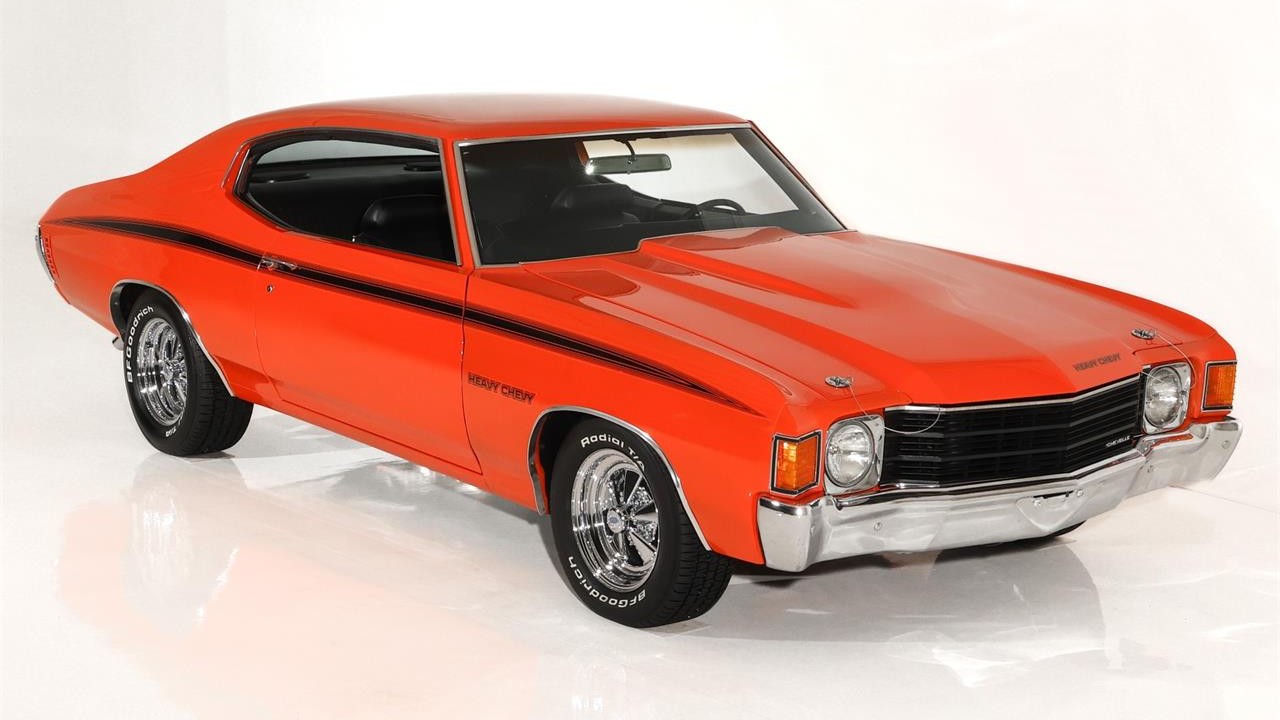
Image plays a strong role in the human condition—we can poo-pooh it all we want, but most of us have a stake in status. Starting in 1970, Chevrolet allowed a big-block to be installed in a Chevelle without SS equipment, but that didn’t seem enough for the marketing folks, who introduced a mid-year package in 1971 to satisfy the status slaves. Our Pick of the Day is this vehicle in the first (and final) full model year of its existence: this 1972 Chevrolet Heavy Chevy is listed for sale on ClassicCars.com by a dealership in Des Moines, Iowa.
Starting in the 1969 model year, Chevrolet expanded the Chevelle SS 396 by making it an optional performance package (it had been a model for several years previously) and available for both the 300 Deluxe and Malibu. Considering the success of the Plymouth Road Runner, it can be inferred Chevrolet prepared itself to do battle head-to-head. It didn’t quite turn out that way, as it seems Malibu-spec’d SS 396s greatly outnumber the duo of 300 Deluxes.

For 1970, the SS 396 and new SS 454 continued as performance packages, but only for the upscale Malibu. In fact, Magnum 500-style wheels were standard, showing that Chevrolet gave up on competing with the Road Runner on features (or lack thereof). The following model year, the SS package was downgraded to require a 350 two-barrel to help increase sales in the face of high insurance premiums and an evolving market.

In addition, Chevrolet introduced a mid-year package called Heavy Chevy (code YF3). The Road Runner’s influence returned to Chevrolet because the Heavy Chevy was a combination of a late-to-the-party Road Runner-fighter and sporty insurance-buster. Any V8 up to the Turbo-Jet 400 (confusingly, the 402/300) was available, which included the lowly 307 two-barrel as the starting point. This contrasted with the SS, as the LS5 454 was the top engine.

Aside of price (about half as expensive) and fewer items of equipment, there was one more distinction between Heavy Chevy and SS packages: the former was based on the Chevelle, while the latter was based on the more upscale Malibu. The Heavy Chevy (which was introduced at the same time as the Rally Nova, also a companion to the Nova SS) was “heavy on looks and light on price.” It was “designed for the under-25 group, the single market, for guys as well as gals. Both these cars afford the owner an opportunity to express his or her individuality at a minimum price.” A prospect looking for a performance car image at an economy car price was the purpose: low initial cost, low operating costs, low insurance rates (something that the SS may or may not have been able to avoid, considering the insurance climate), and high resale (which was touted as a “Chevrolet tradition”).

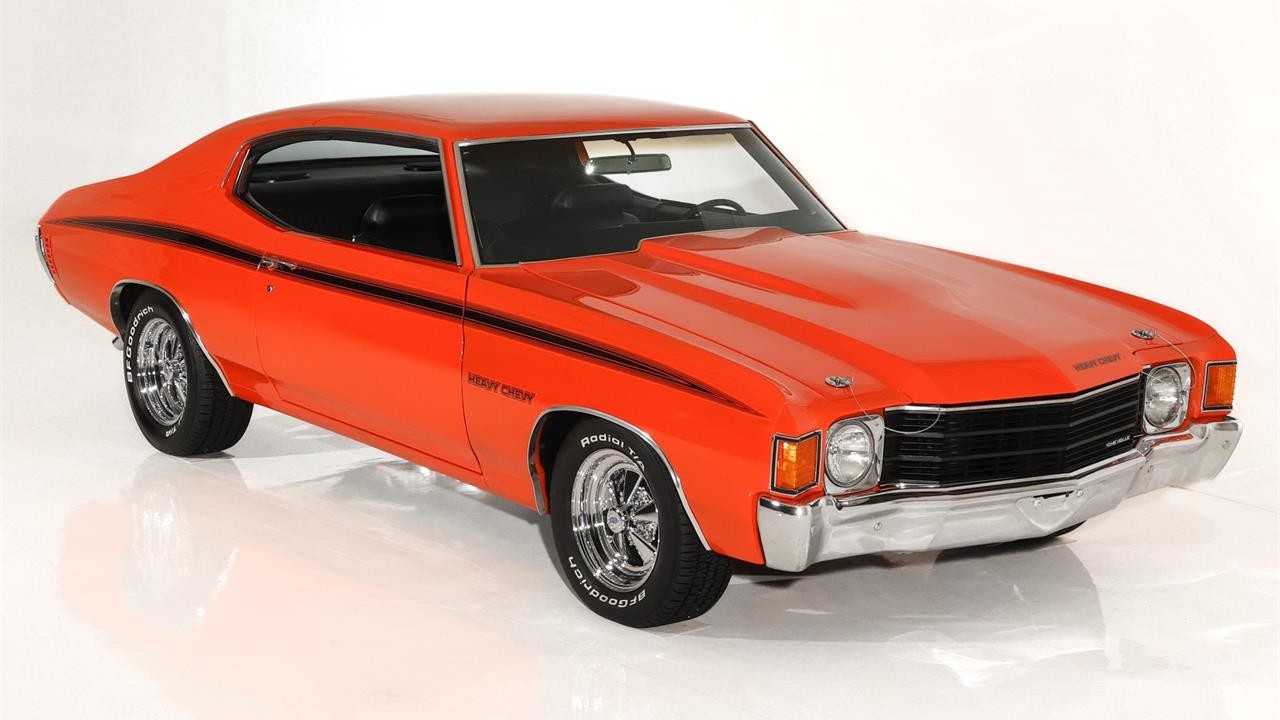
Equipment included in the YF3 package included special body stripes, Heavy Chevy decals on all four sides, special SS hood with raised center and lock pins, black-painted grille, black-painted headlight bezels, and 14-inch Rally Wheels without trim rings. For you Chevy die-hards, SS equipment that was not included with the Heavy Chevy included the Sport Suspension, special instrument panel, 15-inch SS wheels, and power disc/drum brakes, among others. After a mid-year introduction, 6,727 Chevelles were built as Heavy Chevys.

Chevrolet continued to offer the Heavy Chevy for one more year, with production ballooning to 9,508, but SS sales increased too so maybe the Heavy Chevy wasn’t needed—only SS Equipment continued for 1973. This Flame Orange 1972 Chevrolet Heavy Chevy is perhaps the most conspicuous iteration of this vehicle, plus it’s been “upgraded with big-block power, four-wheel Wilwood disc brakes, automatic transmission and new 12-bolt rear with Posi and a tire-smoking 4.11 gear” with options that include power steering and air conditioning. The seller says the “exterior chrome is all new, new shaded windshield, new blacked-out grill and domed hood with locking pins” while “the interior is restored with new Heavy Chevy material on the factory bench seat, new fitted carpet, tach and gauges, tilt steering column, and RetroSound [stereo] with rear-mounted speakers.” Though an original 350 car, this one features a 454 dressed as a 402.

Sure, one could spec a 402 Chevelle without Heavy Chevy equipment, but the “Q-ship” would lack one thing: image. Though the seller doesn’t specify a price (“contact seller”), we know that status plays a large role in people’s perceptions, both of themselves and what they want others to notice. The value of the Heavy Chevy is that no one will ever think it’s—and you’re—half a Super Sport.
Click here to view this Pick of the Day on ClassicCars.com